All of Thailand
Destinations
Local photographers, videographers and drone pilots across twelve Thai destinations, from the Andaman islands to the Gulf and the north. They know which hour a beach is still empty, where the tide matters and where a drone may legally fly.
12 destinations
Search a destination
Phuket
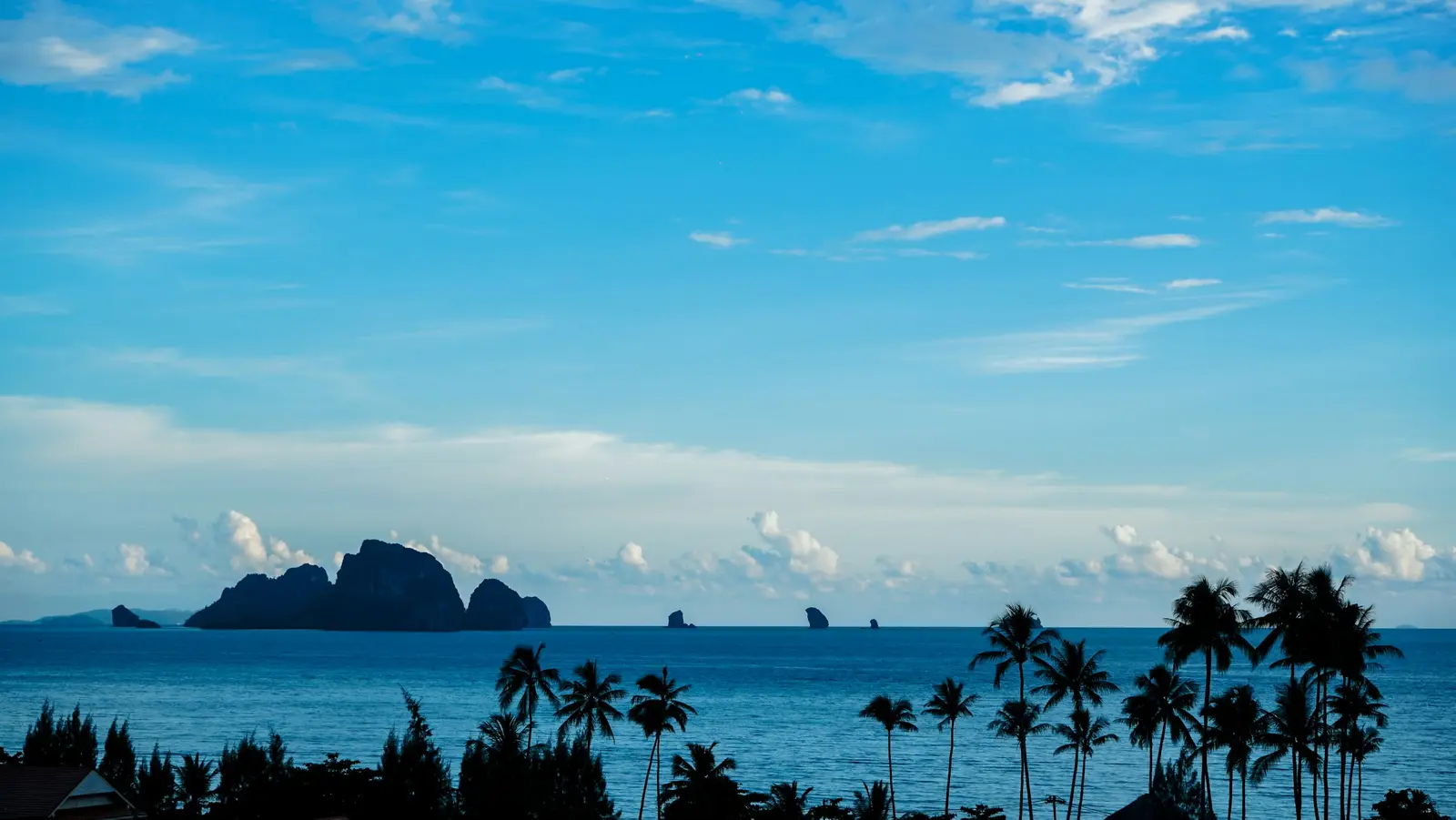
Phuket sits eight degrees north of the equator, which compresses the usable day into two short windows. The first is the hour after sunrise, a little after six, when the beaches are empty and the light is soft but comes from inland, behind the hills; the second is the ninety minutes before sunset, roughly half past six all year, when the west coast — Kata, Karon, Patong, Kamala, Surin, Bang Tao, Nai Harn — has the sun low over the sea. Between the two the light is vertical and hard, and the sand reflects it back into faces. Rawai and Chalong face south and east, have no sea sunset and lose the water at low tide; they are boat departures, not backdrops. On an overcast day the window widens: cloud softens the midday sun enough to shoot at three in the afternoon, which is one of the few real advantages of the wet season. The second fact is distance. The island is about fifty kilometres long, and the road from Mai Khao in the north to Promthep in the south takes well over an hour in evening traffic through Patong hill or the Chalong roundabout. A session that tries to combine Old Town in the afternoon with a southern sunset has to leave by half past four. We usually start where you are staying, and if you add time for a second location (+30 min, $59), we pick one within twenty minutes of it rather than crossing the island for a viewpoint that will be full anyway. Hotel grounds are a separate question: most resorts welcome a session for their own guests, some charge an outside-photographer fee, and a few allow none at all — we ask on your behalf before the day, never at the gate.
Explore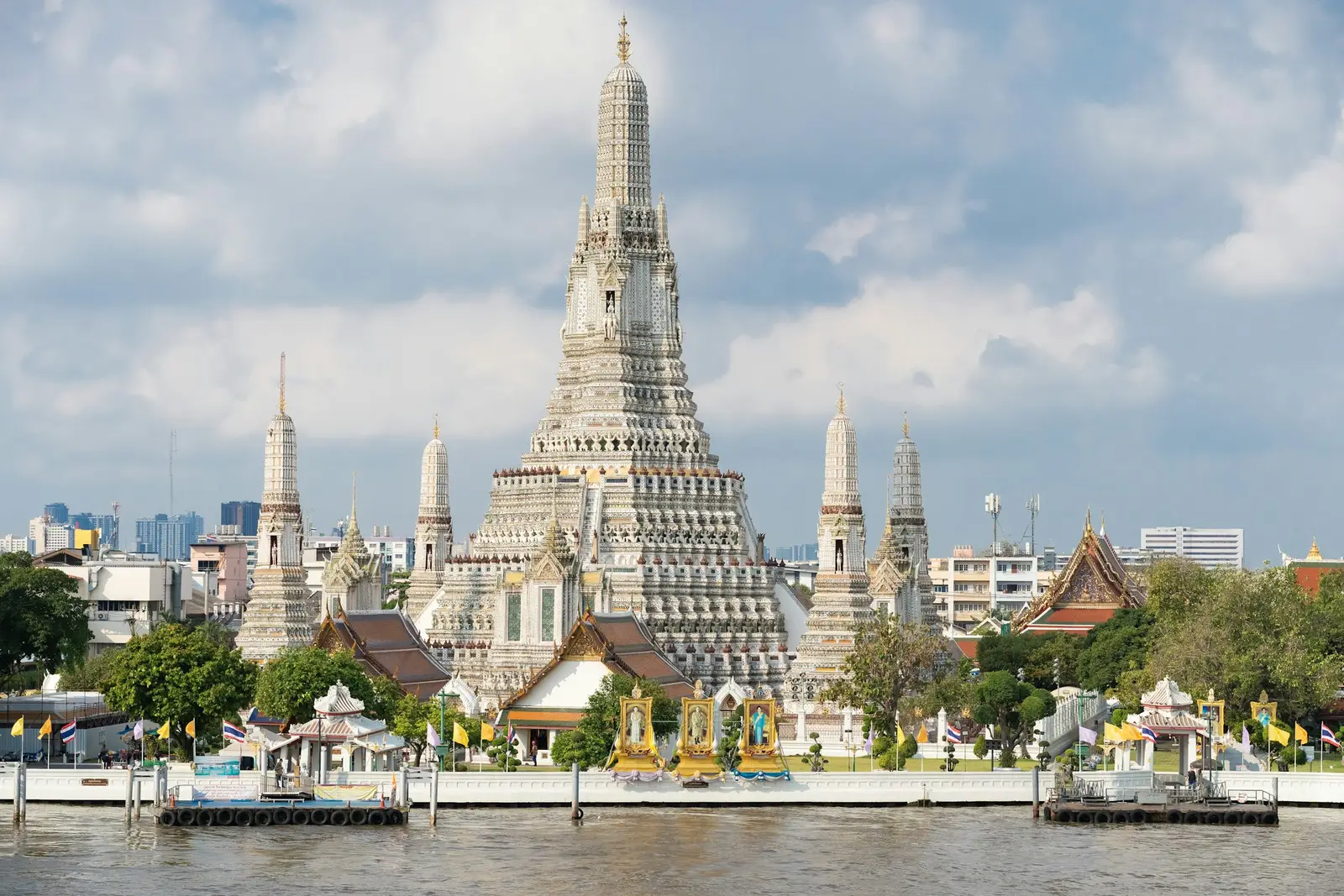
Bangkok
The old town is a morning job. Rattanakosin — the Grand Palace, Wat Pho and Wat Arun across the river — is stone, gilt and paving with almost no shade, and from about ten the sun is overhead and everyone in the frame looks as if they have been standing in it, because they have. Wat Arun opens at eight and the costume studios in the lanes outside open with it; the first hour is when the prang is lit from the east and the terraces are still quiet. The Grand Palace opens at half past eight and is the one landmark where a real session is not on offer: the dress code is checked at the gate, the Emerald Buddha chapel cannot be photographed at all, and anything that looks like a professional shoot needs permission arranged in advance, not negotiated at the door. The evening belongs to the other bank. From Tha Tien pier Wat Arun sits directly across the river with the sun going down behind it, and as the light fades the floodlights come on — the best single frame in Bangkok, five minutes on foot from Wat Pho. Chinatown only starts after dark, when the neon over Yaowarat Road and the food stalls are lit. Rooftop bars in Silom, Sathorn and on the river need a booking, usually a smart-casual dress code and the venue’s agreement before anything bigger than a phone comes out. Two things are fixed: drones do not fly over the old town or near the palaces, and sessions move by river boat and BTS rather than by car — Sukhumvit to the old town at five in the afternoon can take an hour. In the rainy season an evening storm can cancel the sunset, so a spare evening is worth keeping in the plan.
Explore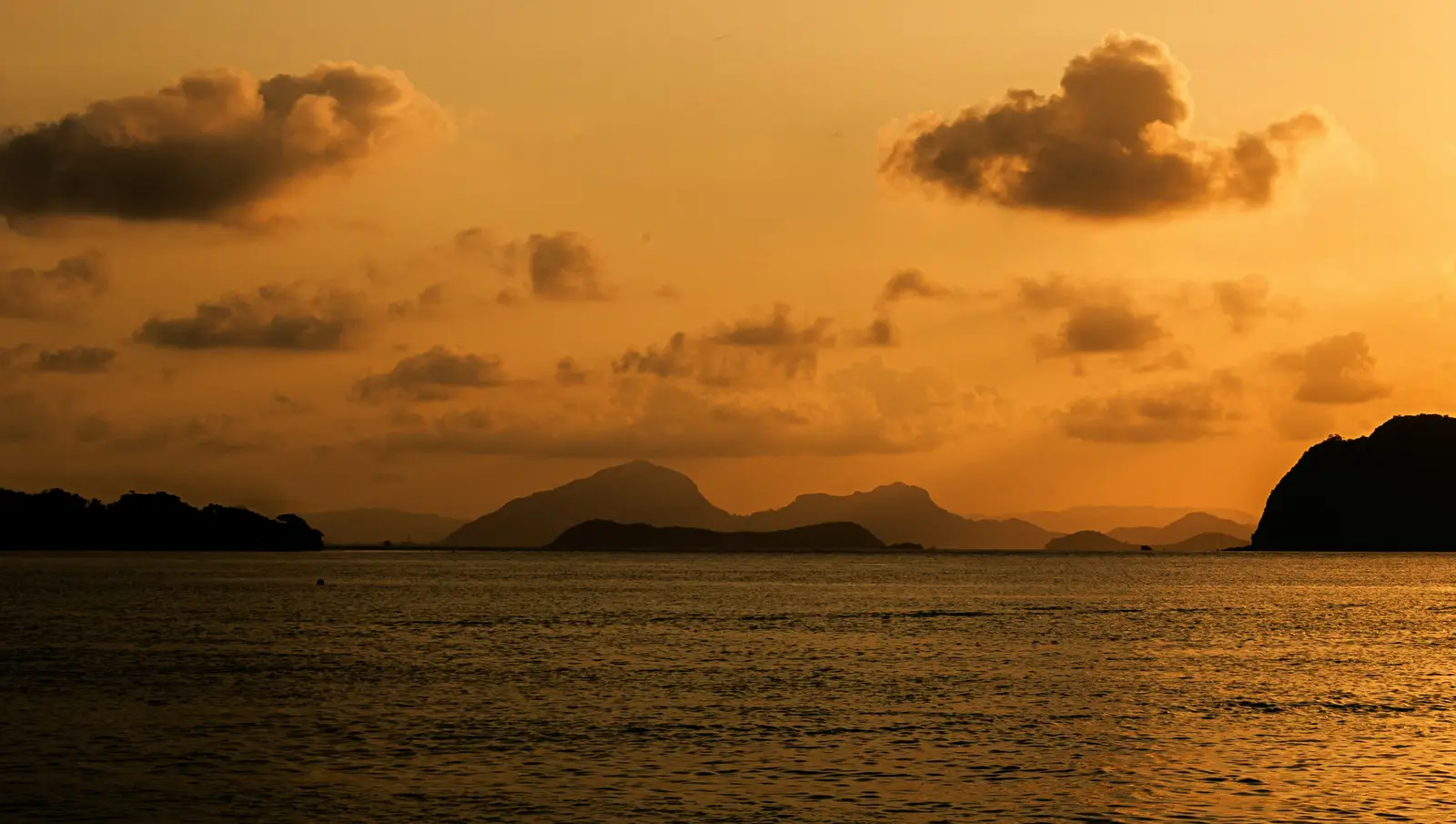
Koh Samui
Samui is round, and every coast does something different with the light. The east side — Chaweng, Chaweng Noi, Lamai — looks straight at the sunrise, so its beaches are at their best from about six to half past seven and flat and crowded by ten. The west coast from Nathon down to Lipa Noi and Taling Ngam is the only place on the island where the sun goes down into the sea, with the Five Islands and the Ang Thong archipelago on the horizon. The north coast, Bophut and Maenam, looks across at Koh Phangan and gets side light at both ends of the day. Near the equator the golden hour is short — closer to half an hour than an hour — so a session is built around one coast, not two. The ring road is about fifty kilometres, and through Chaweng in the evening it is slower than the map suggests. Most weddings and vow renewals here happen in private villas and resorts, and that is where permission matters: the sand in front of a resort is public in Thailand, but its lawn, pool deck and sala are not, and a shoot there is booked with the venue. The other constraint is the airport. Samui Airport sits on the north-east corner, and Thai rules keep drones out of a 9 km radius around it unless cleared, which takes in Bophut, Fisherman's Village, Choeng Mon, Big Buddha and the north end of Chaweng. Drone work is planned for Lamai, the south coast and the west. For a villa inside the zone, the aerial is replaced by a frame from the highest terrace or a hill nearby — and that is settled before the booking, not discovered on the day.
Explore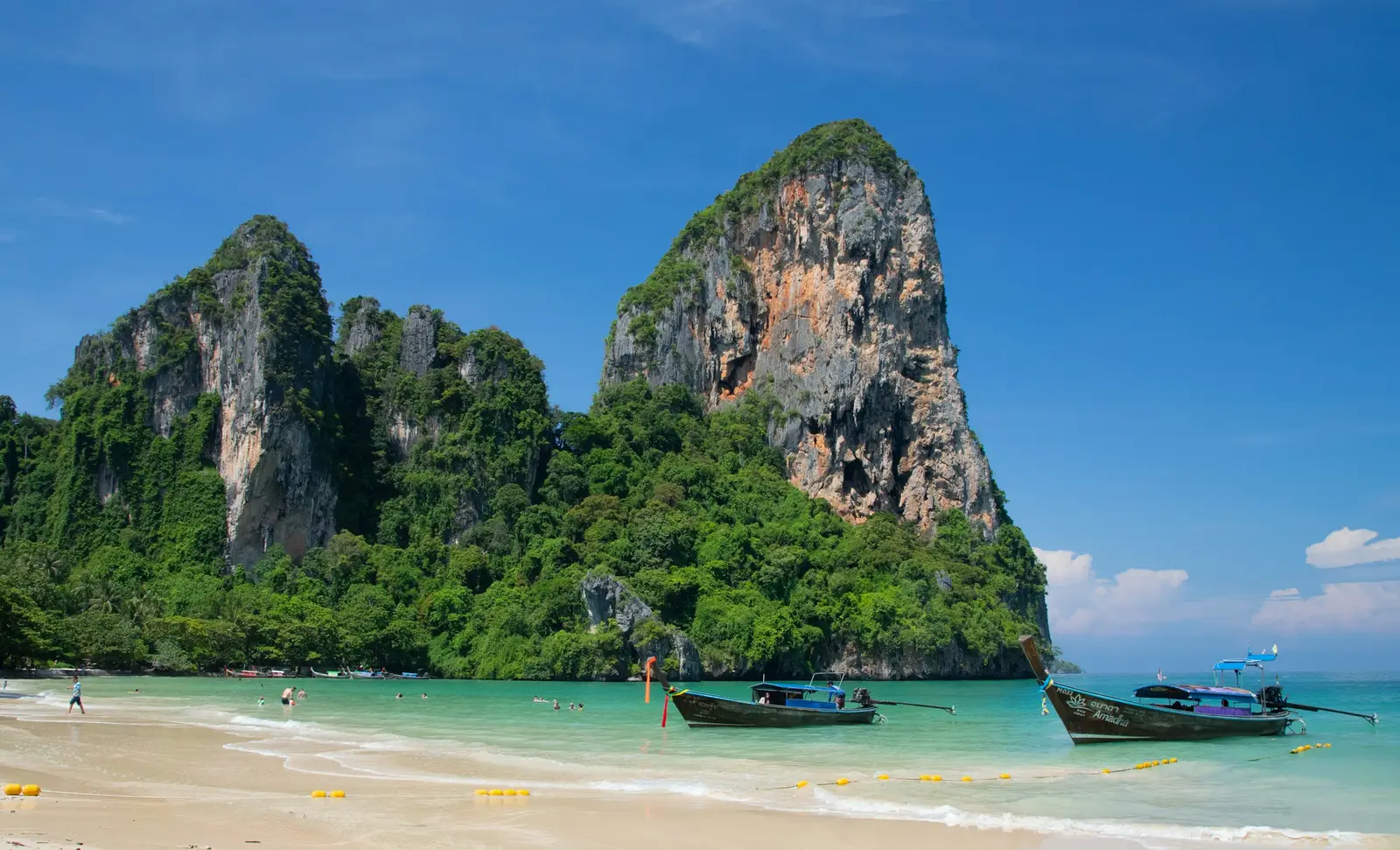
Krabi
Most visitors stay in Ao Nang, and Ao Nang itself is a working beach: longtail boats pulled up along the sand, a road behind it, and a sunset that is good but shared. The reason people book a photographer here is fifteen minutes away by boat — Railay West and Phra Nang, under limestone cliffs that drop straight into the sand. There is no road to either, so the plan is built around the boat: longtails leave Ao Nang when they fill up or on a charter, the last regular ones back go around sunset, and for a sunset session on Railay we book a private longtail for the return so nobody is waiting on a crowded beach in the dark. Once you are there, Railay is also the one place in the area with variety on foot: West, Phra Nang and the cliff path between them are ten minutes apart, so with the +30 min add-on a single session takes in three backdrops without another boat. The tide is the other clock. The Andaman tidal range here is large, and on Railay East the sea goes out to bare mud; the islands of the Krabi bay change shape with it — the sandbar between Koh Tup and Koh Kai only appears at low water. We check the tide table when you book. Wardrobe follows the terrain: you will step off a longtail into knee-deep water, so shoes come off and long hems get wet. Light, quick-drying fabric photographs better here than anything that needs to stay pristine. Midday is not wasted here the way it is on open beaches: the overhangs at Phra Nang throw deep shade onto the sand, and portraits in that shade, with bright water beyond, are some of the best of the day.
Explore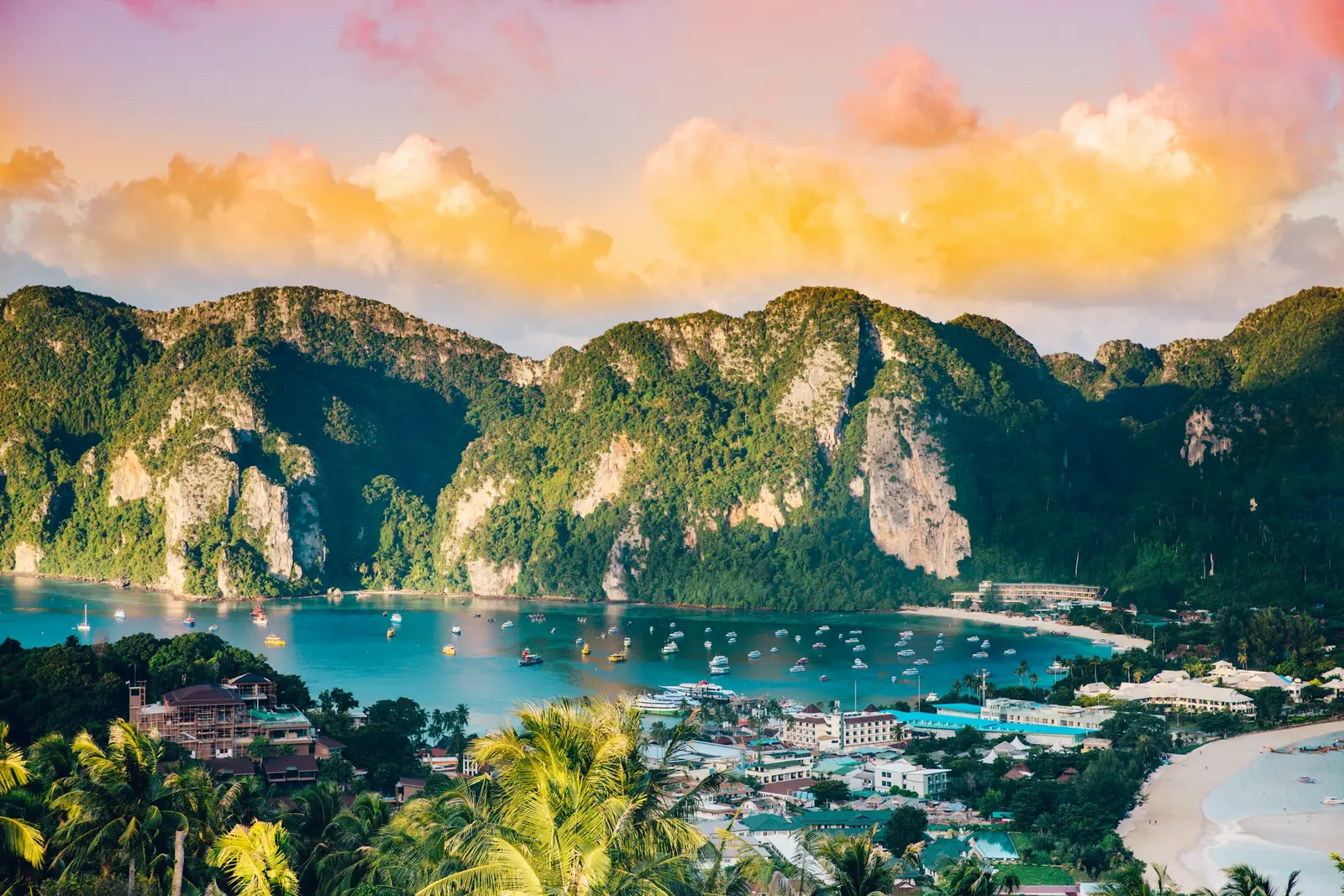
Koh Phi Phi
Phi Phi Don is where people stay — no cars, a village on a narrow isthmus between Tonsai and Loh Dalum bays, and a viewpoint above it. Phi Phi Leh, across the water, is uninhabited national park: Maya Bay, Pileh Lagoon, the cliffs. Between roughly ten and three the whole archipelago fills with speedboats from Phuket and Krabi, and Pileh Lagoon in particular can have dozens of boats in it at once. Staying overnight on Phi Phi Don changes everything: a chartered longtail or speedboat leaving at first light reaches the lagoon and the cliffs while the water is still glassy and empty. Phi Phi Don itself has no roads: a small landing fee is collected at Tonsai pier, everything moves on foot or by longtail, and the radius of a session on land is set by how far you want to walk in the heat — in practice the village, the viewpoint and Loh Dalum. Maya Bay is the one most people ask about, and it comes with rules. It belongs to the Hat Noppharat Thara–Mu Ko Phi Phi National Park; boats no longer land on the beach but at a pontoon behind it, you walk in on a boardwalk, swimming is not allowed, and visits are kept short. It closes every year for August and September to let the reef recover. Drones over the park need written permission, which is not given for casual flights — the aerial shots that sell Phi Phi are planned around that, from boats and from Phi Phi Don itself. Wardrobe here is decided by the boat: you climb in and out of a longtail over its side, often into the water, and the bow takes spray on every crossing. A long, light dress on the bow in the wind is the photograph people come for — it is carried to the location in a bag, not worn on the way.
Explore
Khao Lak
Khao Lak is not a town so much as a coastline in Phang Nga province, about an hour and a quarter north of Phuket airport: Nang Thong, Bang Niang, Khuk Khak, Pakweeb, Coconut Beach, each backed by resort gardens and casuarina trees rather than a road or a promenade. The beaches face due west and are long and open, which makes them the easiest sunset in the region to photograph — there is always a stretch with no one on it, and the sand is wide enough at low tide to walk into the reflection of the sky. There is no real centre either — a strip of shops and restaurants along the main road behind Nang Thong and Bang Niang — so a session here is a beach session almost by definition. Variety comes from the coast itself: granite boulders at Memories Beach in the south, coral rubble at Pakarang Cape in the north. What Khao Lak has instead of crowds is surf. The coast is exposed to the open Andaman, and from May to October the waves are heavy and swimming is dangerous; even in the dry season, wading for a photograph is something we judge on the day. It is also a family and honeymoon coast — quiet resorts, early evenings — so most sessions here start at the hotel and walk out onto the beach in front of it. Bang Niang has the Boat 813 tsunami memorial; we treat it as what it is and do not use it as a backdrop. Open sand here has no shade at all, so a family session with small children starts about an hour before sunset and finishes as the sky turns pink — the short window when the heat has gone and everybody is still cheerful.
Explore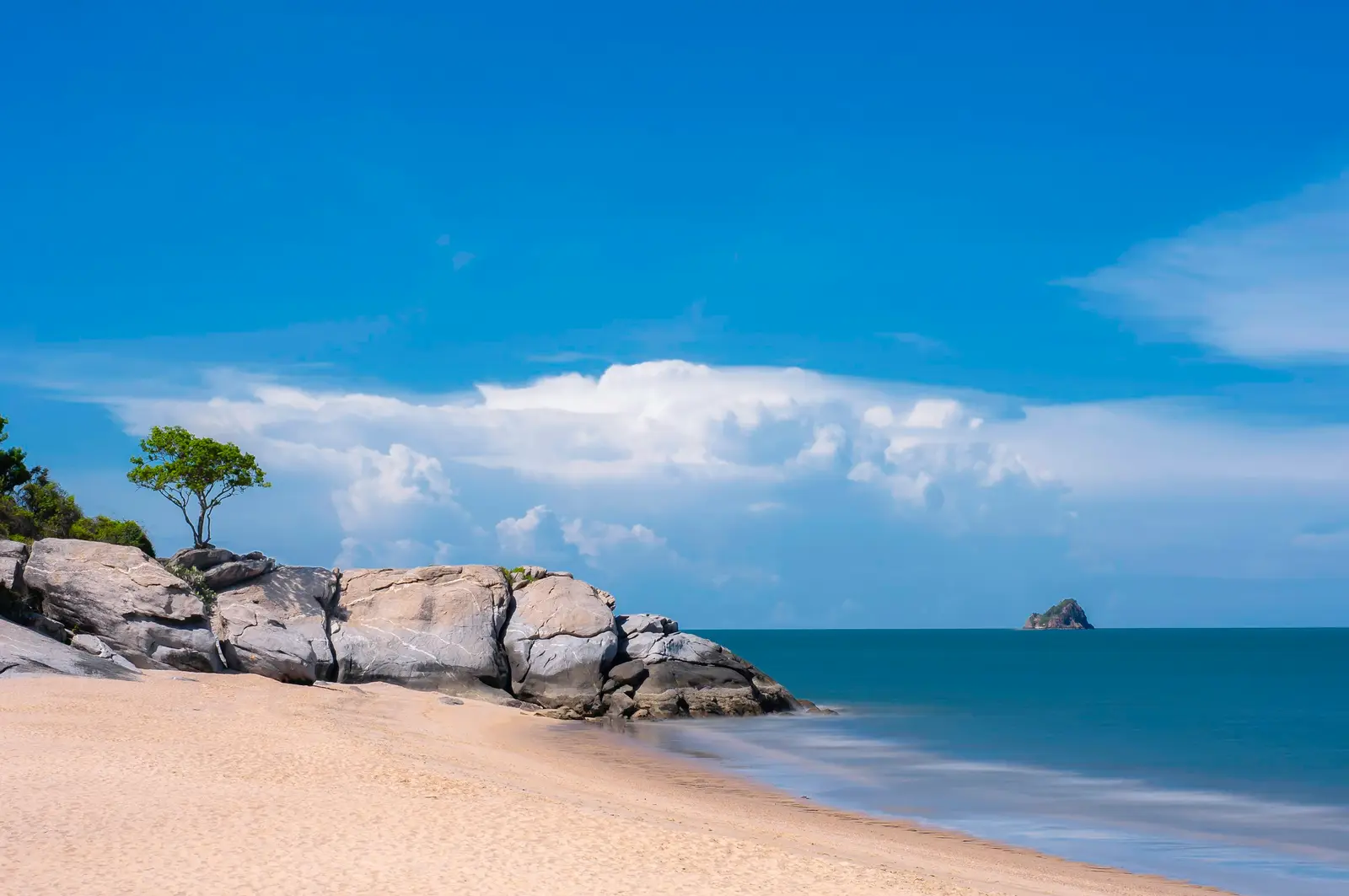
Koh Lanta
The island is long and narrow, with one road down the west side through Klong Dao, Long Beach, Klong Khong, Klong Nin and Kantiang Bay, each a separate bay facing west over open sea. They get quieter the further south you go, and by Kantiang and Bamboo Bay you are on beaches with a single resort and jungle behind. For a sunset session the question is not whether the light will be good but which bay suits you: wide and flat in the north, smaller and framed by headlands in the south. The island is quiet by design — no big town, no high-rise, almost no nightlife south of Long Beach — which is why families and long-stay couples choose it, and why a session here rarely has anyone else in the frame. Distances are real, though: from Saladan in the north down to Kantiang is the better part of an hour by road. On the east coast, Lanta Old Town is a different picture — wooden shophouses on stilts over the water, a pier, fishing boats. It faces east across to the mainland, so it is lit from the front in the morning and in shade by the afternoon; combining it with a western sunset on the same day means a morning and an evening, not one long session. The southern tip is Mu Ko Lanta National Park, with its lighthouse on a headland; it charges an entrance fee, has monkeys that know what a bag is, and drones need the park’s permission. Most visitors get around Lanta by scooter; for a session we meet at your hotel or on the beach, and if the second location is in another bay we move by car, not with the outfit on the back of a bike.
Explore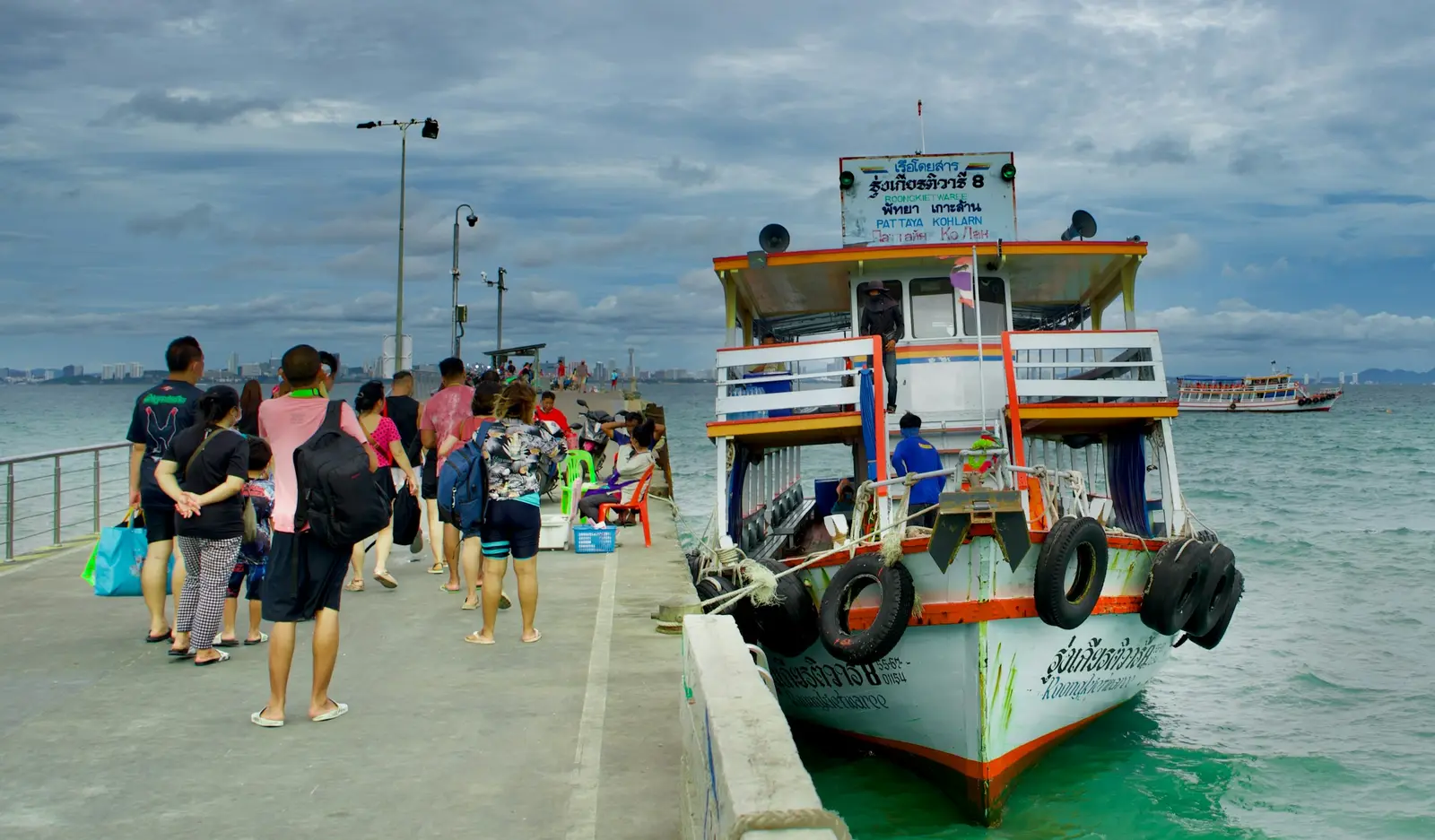
Pattaya
The whole coast here looks west across the Gulf: Pattaya Bay, Jomtien, Wong Amat in Naklua all have the sun setting over the water, which is what Pattaya does better than any other resort on the Gulf. The catch is that the central bay is a working city beach with Beach Road behind it, so the good sunset frames are at the edges — Wong Amat to the north, the Pratumnak headland between Pattaya and Jomtien, and the long, less built-up stretch from Jomtien down to Na Jomtien. Mornings are for the places that need empty space: the Sanctuary of Truth at opening, or Koh Larn before the day-trip boats. Midday is for nothing outdoors: the sun is nearly overhead for much of the year, and the beaches are at their most crowded. Koh Larn is where the timing catches people out. The public ferry from Bali Hai pier takes about forty-five minutes, and the last scheduled boat back from Na Ban pier leaves at around 18:00 — so a sunset on Samae beach, the island's west-facing bay, means a chartered speedboat or a night on the island. Most visitors arrive via Bangkok's Suvarnabhumi, roughly two hours by road; U-Tapao, about forty minutes south, has fewer flights. The airport and the Sattahip naval area restrict drones only south of the city. For a yacht session, boats leave from the marinas around Na Jomtien and run south along the coast, so a sunset at sea is timed from the marina, not from the hotel. Allow for the traffic on Sukhumvit Road on the way.
Explore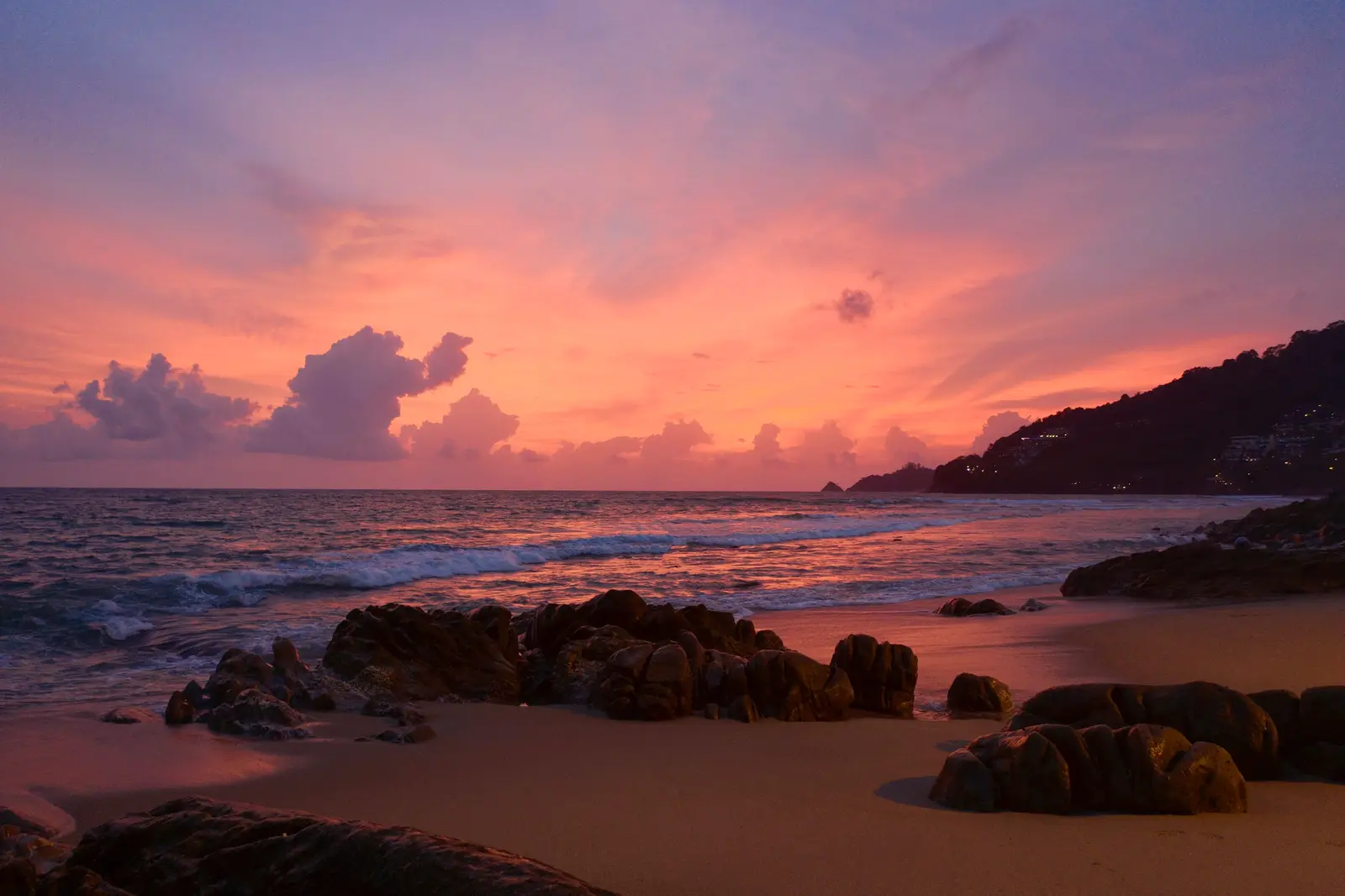
Koh Phangan
Getting here is part of the plan. The island has no working airport — the project was abandoned years ago — so everyone arrives by boat, usually from Samui in half an hour to an hour, landing at Thong Sala on the south-west coast or at Haad Rin. For a guest staying on Samui, the last public boats back leave in the early evening, so a sunset session on Phangan means a night on the island or a private speedboat. Inside the island, distance is measured in hills: the road to Thong Nai Pan is steep and winding, Bottle Beach is easiest by long-tail boat, and the frames worth having are often at the end of a track that is no place for a scooter in a dress. We plan the route in a car, and allow for it in the hours. The island has two coasts and two crowds. The west — Srithanu, Haad Yao, Haad Salad, Mae Haad — faces the sunset and is where the yoga schools, cafés and long-stay creators live; this is where content, solo and portrait sessions are booked. The east and north — Thong Nai Pan, Haad Rin's Sunrise beach — face the morning. Haad Rin itself is two beaches on a narrow neck of land: Sunrise beach, where the Full Moon Party happens, and Sunset beach a few minutes' walk away on the other side. Between them, the north coast — Chaloklum, Malibu, Bottle Beach — is the island at its quietest, and its shallow, clear water is the reason many couples come over from Samui for the day rather than shooting at home.
Explore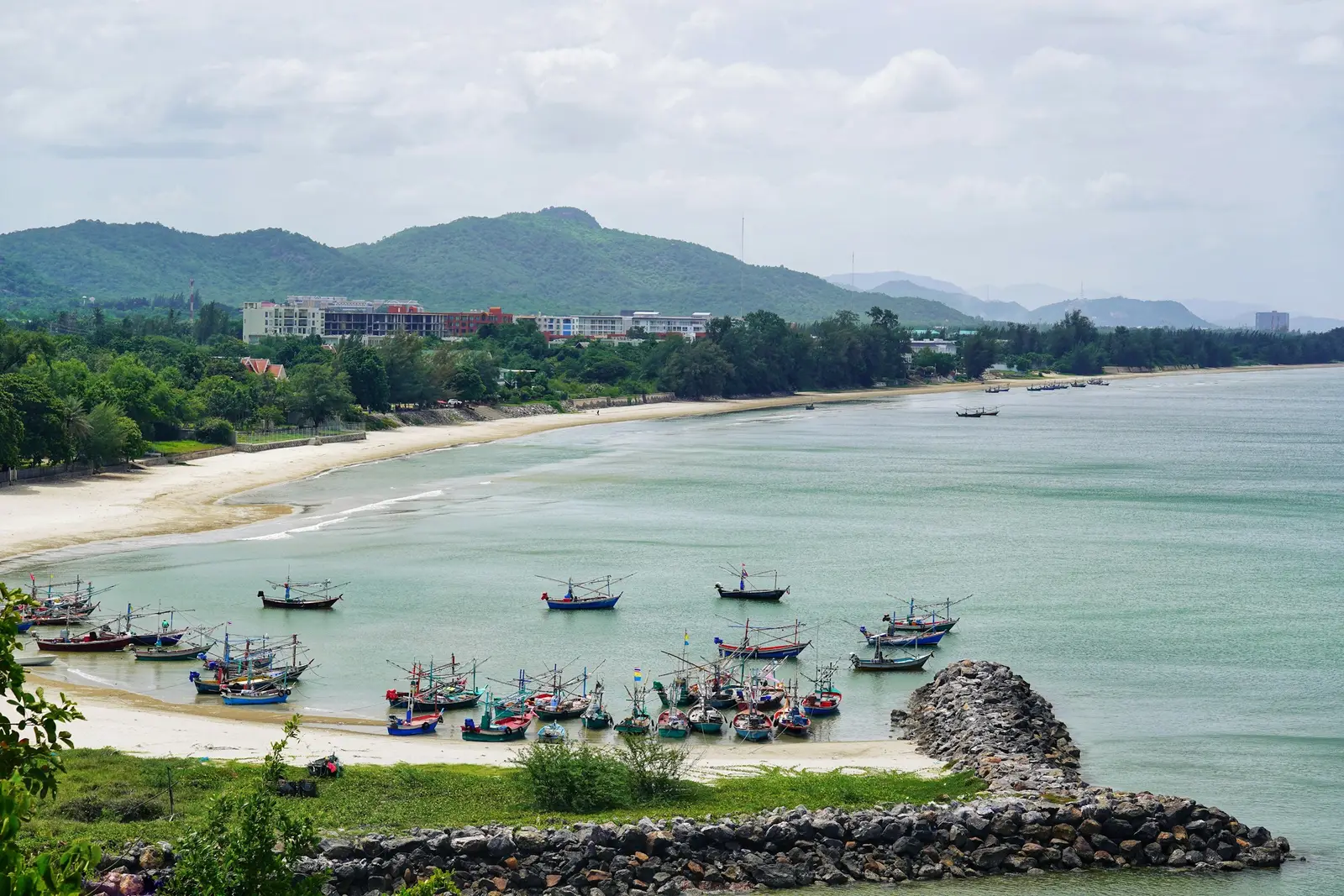
Hua Hin
Hua Hin is the old royal seaside — the king's summer palace has stood on the beach here since the 1920s — and it photographs like it: a long, wide, gently shelving beach, horses walking the tideline, and a town that is quieter and more family-minded than Pattaya. Because the coast faces east, the sea is lit from the front at sunrise and the sun sets behind the land. That makes two good sessions: the first hour, with the light coming off the water, and the last two, when the beach is in open shade and nobody is squinting. At low tide the sand is wide and wet enough to hold a reflection, and the horses — a paid ride, arranged with their owners — give a frame that is entirely Hua Hin's own. The best location is an hour south and works on its own schedule. In Phraya Nakhon cave, in Khao Sam Roi Yot National Park, a beam of light falls through a collapsed roof onto a royal pavilion between about 10:30 and 11:30, most reliably from December to March — after a steep climb of around half an hour from Laem Sala beach. Nearer town, Khao Takiab has its standing Buddha and its monkeys, the historic railway station is preserved beside the new elevated one, and Cha-am and Pranburi extend the coast north and south. Most visitors come by road from Bangkok, roughly three hours, which is why the session is best put on the second morning rather than the day of arrival. Families with young children usually take the late-afternoon beach session and leave the cave to the adults.
Explore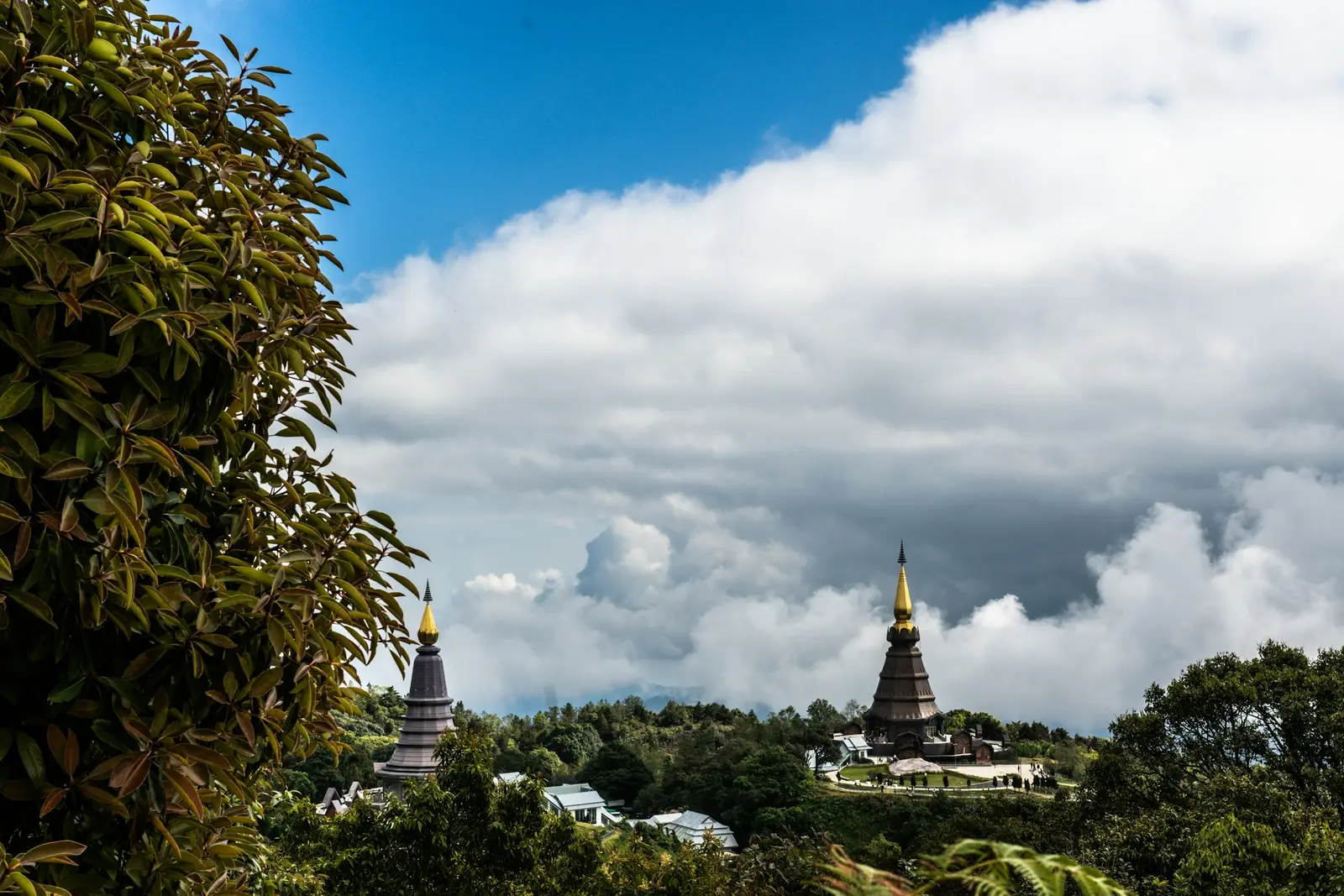
Chiang Mai
The Old City is a square roughly a mile on each side inside a moat and the remains of a brick wall, and it is walkable: Tha Phae Gate, Wat Chedi Luang’s ruined chedi and Wat Phra Singh are a twenty-minute stroll apart, so a ninety-minute session takes in three temples without a car. Just after sunrise monks walk their alms rounds through the lanes; they are photographed from a respectful distance and never posed beside. The light rules are the same as anywhere in Thailand — early or late — but the mornings here are cooler, and between November and February a seven o’clock start is comfortable rather than heroic. West of the moat, Nimman is cafés, co-working spaces and the city’s large remote-work population, which is why headshots and personal-brand sessions are booked here more than anywhere else in the country. The second half of Chiang Mai is the mountains. Wat Phra That Doi Suthep is half an hour up a winding road and a naga staircase of some three hundred steps; Wat Pha Lat, a quiet forest monastery halfway up, is the photograph most visitors do not know about. Doi Inthanon, the highest peak in Thailand, is about two hours south-west and close to freezing at sunrise in December and January. North of the city, Mae Rim and Mae Taeng have rice fields that are green from July to October and Wat Ban Den, a gilded Lanna temple popular for costume shoots. The costume itself differs from Bangkok’s: studios here dress you in northern Lanna style, with the pha sin skirt. A mountain day is a long one, so it is built around one summit rather than two.
Explore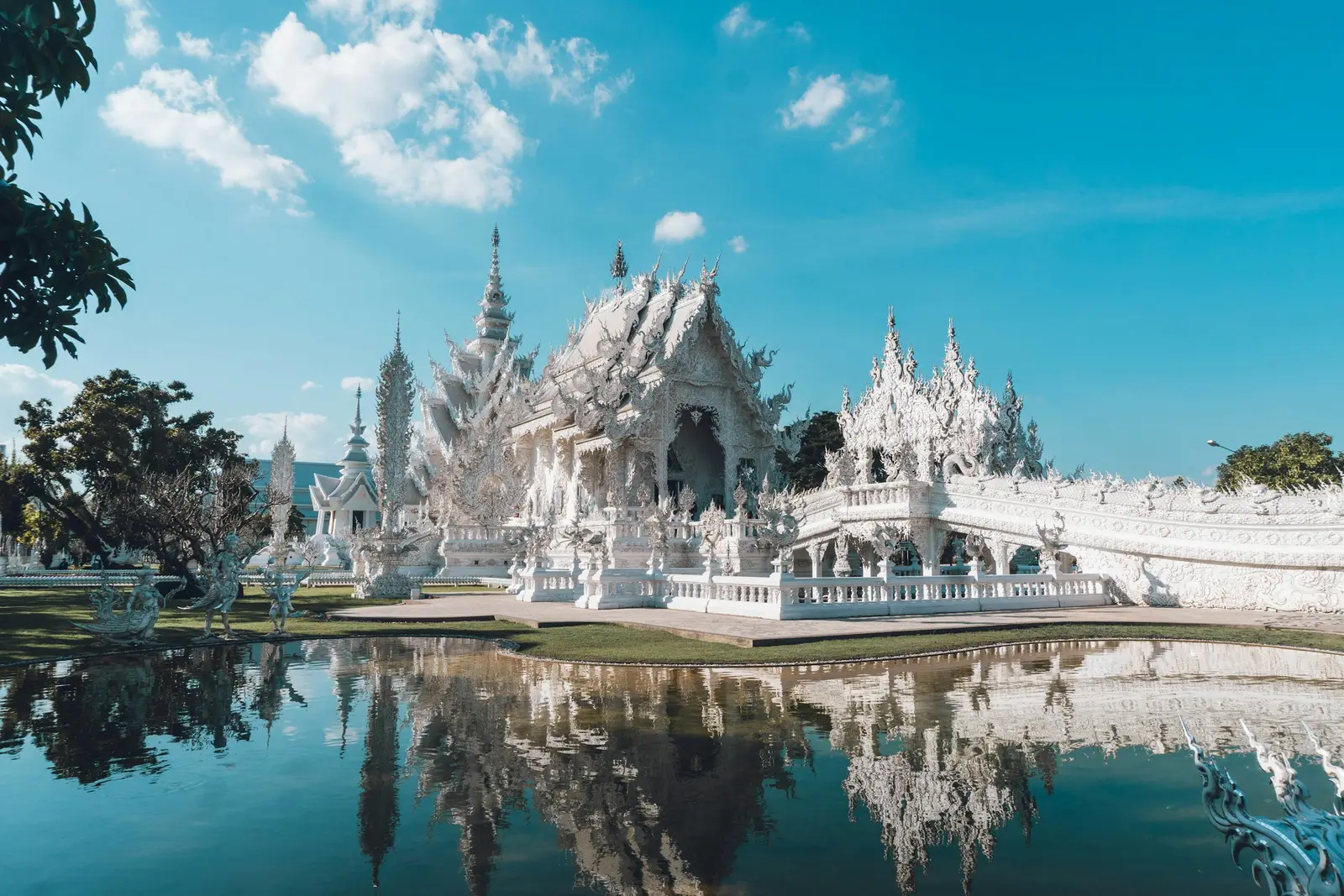
Chiang Rai
Chiang Rai is three hours by road from Chiang Mai, which is why the White Temple, Wat Rong Khun, fills from about half past ten and stays full until early afternoon: that is when the day tours arrive. The temple opens at eight, and the first hour and a half is the only time it can be photographed with nobody in the frame and in light it can take. It is white plaster set with mirror glass, and at noon it reflects so much sun that skin goes grey beside it. Inside the main hall photography is not allowed, the bridge across to it runs one way only, and staff keep people moving — so the portraits are made from the pond side and the gardens, not on the bridge. The ticket price for foreign visitors went up in 2026, and the counter closes a little before the gates do. The rest of the city works the other way round. The Blue Temple, Wat Rong Suea Ten, is free, opens early and is deep blue inside, so it photographs well in any weather; the Black House, Baan Dam, is a ticketed museum of dark teak halls north of town. Then the province opens out: Choui Fong’s terraced tea fields and the hill village of Doi Mae Salong to the north-west, Doi Tung and the Mae Fah Luang gardens, and an hour north at Sop Ruak the Golden Triangle, where the Mekong and Ruak rivers meet between Thailand, Laos and Myanmar. Distances are long, so a full day here is planned as one route rather than a list, and border areas are sensitive for drones — we choose aerial locations accordingly.
Explore


About these places
Twelve places, two coasts and the north
- Destinations
- 12
- Andaman coast
- 5
- Gulf of Thailand
- 4
- Cities & the north
- 3
Five destinations sit on the Andaman Sea — Phuket, Krabi, Koh Phi Phi, Khao Lak and Koh Lanta. Four are on the Gulf of Thailand: Koh Samui, Koh Phangan, Pattaya and Hua Hin. Three are inland or urban: Bangkok, Chiang Mai and Chiang Rai.
The split matters because the two coasts have different rainy seasons. The Andaman side is wettest from May to October; the Gulf islands get most of their rain from October to December. If your dates fall in one side’s monsoon, the other is often dry, and we will say so before you book.
Each page carries what a visiting photographer would not know: which beach faces the sunset, when a viewpoint is still empty, whether the tide decides if a sandbar exists, which temples allow photography and how to dress there, and where a drone is allowed to fly — national parks such as the waters around Koh Phi Phi need a separate permit.
Every destination is covered by people who live there, and each page lists the beaches and areas reached from it.